OutlookPart 7 of 7The species
Point It at the Stars
We are about to hold more horsepower than any civilization in history. Give it a frontier worth reaching for, or it will find targets closer to home.
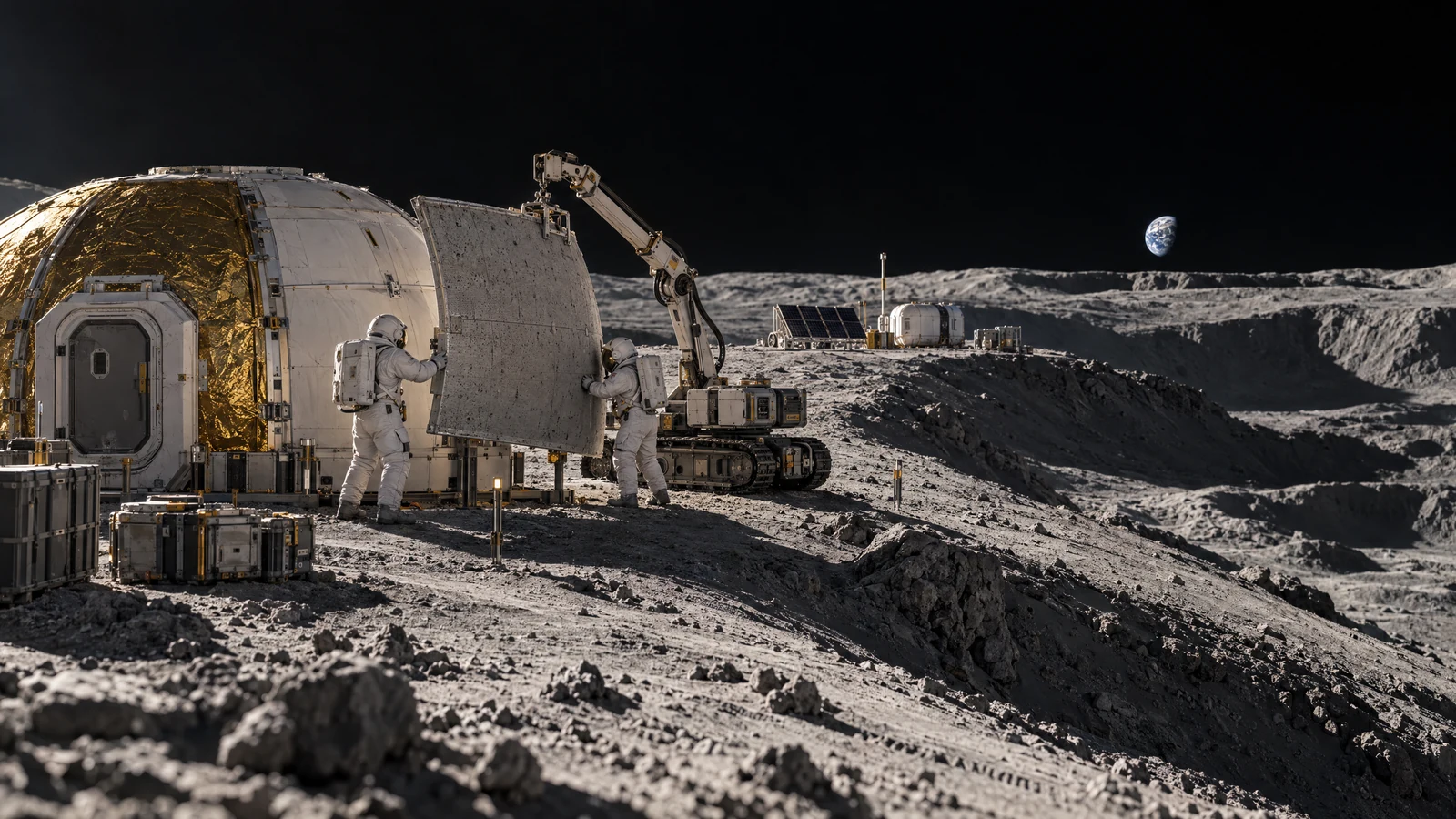
Every leap in human capability has been two leaps at once. Fire cooked food and burned villages. Chemistry made the fertilizer that feeds billions and the explosives that level cities. Physics gave us nuclear power and nuclear weapons. Capability never arrives with a direction attached. We supply the direction.
The intelligence transition is the largest of those leaps. The floor has moved, so one person can attempt almost anything and command the reach of a department. Companies that refuse to retrofit — built from scratch, built to be found, built for agents — move at machine speed. New intelligence is reading the unread library of human knowledge and pulling us out of the Stone Age. Cheaper thinking is growing the physical world, because intelligence runs on atoms and materials, energy, and intelligence are everything. Capital is everywhere, and the bottleneck is operators and skilled hands. Nations are mobilizing their industrial bases.
Add it up and you get more power than any person, company, or country has ever held. That leaves the species one question.
What do we aim it at?
A fixed pie makes enemies
A civilization whose power grows fast while its resources stay fixed will eventually fight over them. When the pie doesn’t grow, the only way to get more is to take someone else’s slice, and better tools sharpen that contest rather than soften it.
With all this horsepower, we must start looking toward the stars, or we will start pointing the firepower at each other here on Earth.
I hold that as a design principle, not a prophecy of doom. Ambitious, capable people need ambitions worthy of them. Give a generation of builders a frontier, and their energy flows into creation, discovery, and cooperation. Deny them one, and the same energy goes looking for a fight. Space is the largest positive-sum project available to us: a pie that grows the harder we work on it.
The frontier is open for business
Space is the final frontier, and it is already an industry. The world flew a record 329 orbital launches in 2025, close to one a day, and logged another 153 in just the first half of 2026. The Space Foundation puts the global space economy at $686 billion in 2025, up 12% in a single year, and 79% of it is commercial.1 That is a market, not a government science budget.
Close to one launch a day
329 orbital launches, 2025
153 launches, January–June 2026
Each grid holds one dot per day of the period. Filled dots count launches, one each, spread evenly rather than placed by date.
Source: Space Foundation, Global Space Economy Report, July 2026. Note 1
People are going back, too. In April 2026, Artemis II carried four astronauts around the Moon and farther from Earth than any humans have ever traveled. NASA is now aiming to land crews near the lunar south pole in 2028.2
The hardest integration test
Space concentrates every problem of the intelligence economy at the hardest difficulty setting. A sustained human presence beyond Earth needs:
- Energy that works far from any grid. NASA’s December 2024 Moon-to-Mars architecture update chose fission as the primary power source for crews on the Martian surface.3 The Moon comes first: in January 2026, NASA and the Department of Energy committed to developing a lunar surface reactor by 2030.4
- Materials that can be processed, recycled, and eventually sourced on site.
- Robotics that can build, inspect, and repair with no technician down the hall.
- Autonomy and intelligence that can make decisions when a signal from Earth takes minutes to arrive.
- Manufacturing and life support reliable enough to bet lives on, because that is the bet.
Each of those capabilities makes us stronger on Earth. Compact power, resilient equipment, autonomous inspection, closed-loop recycling, and ruthless efficiency with materials are the technologies of space settlement and of a tougher civilization at home. The frontier doesn’t compete with our needs here. It drags them forward.
The same architecture update added a lunar cargo lander and an initial surface habitat to NASA’s plans.3 Those are still plans, not hardware. Turning them into hardware is the frontier in practice, and the work will fall to operators, skilled trades, and clean-slate companies.
A choice, not a cure
Space doesn’t guarantee peace. It can just as easily become one more arena for rivalry and weapons. The Artemis Accords set out principles for peaceful purposes, transparency, interoperability, and the open release of scientific data.5
78
nations have now signed the Artemis Accords.6
But the Accords are non-binding, and principles only matter if nations live up to them. The frontier is a choice, which is why it has to be made on purpose, and why the people and countries who build the capability will be the ones who write the norms.
The decisions are being made now
This outlook ends in urgency, not fear. The next few years will shape a very long future. The habits we set now — how we use intelligence, who gets to build, what our institutions reward, where we direct our industrial and military power — will compound for generations. Most people aren’t thinking about this yet. The ones who are have a responsibility to act while the choices are still open.
The future doesn’t happen to us. It gets built: in an apprenticeship, a transmission line, a laboratory, a refinery, a procurement office learning to move faster, a launch pad. Take all that horsepower and aim it outward, not at each other.
Point it at the stars.
Sources
Verified against primary and official sources on 9 November 2026. The NASA architecture update and the Artemis Accords text (carried forward from the source review of 2 November 2026) were re-checked; the Artemis II, lunar reactor, signatory, launch, and space-economy figures are new for this edition. Plans and targets are stated as plans, not deployed hardware.
- 1
Space Foundation, The State of the Global Space Economy: Global Space Economy Report, July 2026 (2026 analysis of 2025 data, with 2026 midyear launch report). $686 billion total; $544.3 billion (79%) commercial; 329 orbital launches in 2025; 153 in January–June 2026.
- 2
NASA, NASA Welcomes Record-Setting Artemis II Moonfarers Back to Earth, 10 April 2026. Peak distance of 252,756 miles, surpassing Apollo 13’s 1970 record; Artemis III planned for 2027 to test operations with commercial landers in low Earth orbit; south-pole landing targeted for 2028.
- 3
NASA, NASA Outlines Latest Moon to Mars Plans in 2024 Architecture Update, 13 December 2024. Architecture decisions, not deployed infrastructure.
- 4
NASA, NASA, Department of Energy to Develop Lunar Surface Reactor by 2030, 13 January 2026 (updated 2 February 2026 with the signed memorandum of understanding). A development target, not a selected design.
- 5
NASA and original signatories, The Artemis Accords, 13 October 2020. Ten non-binding principles; eight founding nations.
- 6
NASA, Artemis Accords and NASA Welcomes Vietnam as Newest Artemis Accords Signatory. Vietnam became the 78th signatory on 28 October 2026.